

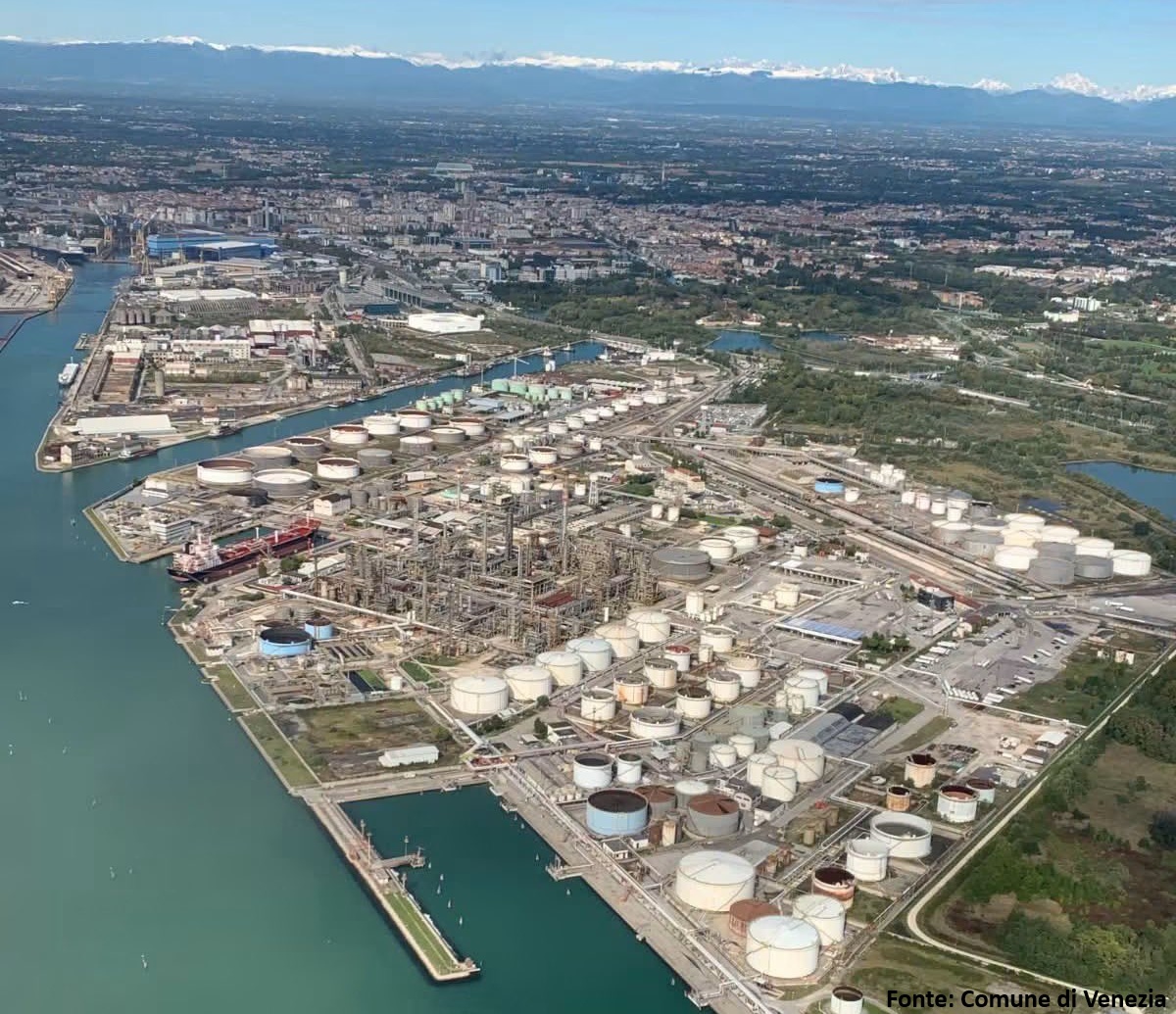
“This is extraordinary news for the Veneto region, for Venice, and for the entire production ecosystem of the North-East. Porto Marghera will become the first European strategic hub for critical raw materials. The European Commission has identified the project—submitted by Italy in collaboration with the Netherlands—as the best-equipped to meet the continent’s needs. It is a significant recognition that validates a collective, systemic bid, and it reflects the excellent work carried out by Regional Minister Massimo Bitonci and all local institutions, starting with the Municipality of Venice and Deputy Mayor Simone Venturini.”
This was the comment from Regional President Alberto Stefani following an announcement made today by Adolfo Urso, Italy’s Minister of Enterprises and ‘Made in Italy,’ at the Raw Materials Forum in Milan.
“When we firmly backed this bid in recent months,” Stefani continued, “we were fully aware of what was at stake: positioning the Veneto region at the centre of one of the most vital industrial endeavours for Europe’s future. Critical raw materials are indispensable for microelectronics, the automotive sector, advanced technologies, the energy transition, and digitalisation. Ensuring their availability is essential for our businesses—it allows us to reduce our reliance on foreign sources and strengthen our own autonomy.” “From the very beginning, we have believed in the potential of Porto Marghera and the strength of its industrial and logistical ecosystem. We are talking about an area that boasts over 1,400 businesses and an output value of 15 billion euros, integrated into a network of connections linking ports, freight terminals, and major European corridors. The Italian bid succeeded precisely by highlighting this dimension: positioning Porto Marghera as the hub of a platform that also encompasses Trieste, Ravenna, the ‘Quadrante Europa’ freight terminal in Verona, and the industrial supply chain of the Northeast.”
“Today’s outcome demonstrates that the Veneto region is capable of competing on the European stage. I want to thank Minister Adolfo Urso and the Meloni Government for pursuing this project with such determination. The Regional Government has supported this vision from the outset, fully aware of the benefits it can generate for Venice and the entire regional productive sector. Now, we must look to the next phase: this recognition must translate into investments and high-quality employment. It is a tremendous opportunity for Venice, and we have no intention of squandering it.”
“The availability of critical raw materials has become a central issue for the competitiveness of businesses and for Europe’s economic security. With the European Commission’s green light for the first strategic continental hub—centred in Porto Marghera—the Veneto region secures a key position in this new industrial landscape. It is a historic achievement, the result of the institutions’ ability to work as a team and to integrate infrastructure, expertise, and relationships with the productive sector.”
This statement was made by Massimo Bitonci, Regional Councillor for Economic Development and Investment Attraction, in response to an announcement by Minister Adolfo Urso at the Raw Materials Forum in Milan.
“I would like to thank President Alberto Stefani, Venice Deputy Mayor Simone Venturini, Minister Adolfo Urso, and the Government—who, together with Cassa Depositi e Prestiti, conceived and pursued this project with determination. Special thanks go to European Commission Executive Vice-President Stéphane Séjourné, who followed the dossier closely and had the opportunity to see firsthand the potential of both Porto Marghera and the Verona Interport. This European recognition validates a collaborative effort and a proposal that successfully highlighted the unique attributes of the Porto Marghera site as the premier European hub for critical raw materials.”
“The Veneto Region has played its part from the very beginning. Porto Marghera has a well-established industrial and logistical vocation, with equipped areas and strategic transport links. Together with the freight terminals in Padua and Verona, the ‘Quadrante Europa’ intermodal hub, and the North Adriatic port system, it forms an infrastructure network of immense value for the movement of goods—by both road and rail—and for connections to major European transport corridors. This hub will now help strengthen the security of European supplies of strategic raw materials, including rare earths and tungsten—essential for sectors such as automotive, electronics, aerospace, and defence—ensuring greater availability even in the event of crises or supply chain disruptions. However, the true economic value of this initiative lies in the downstream opportunities it can generate: the processing, refining, transformation, and recycling of materials. We must ensure that new industrial activities, investments, and skilled employment can flourish around this storage facility.”
Bitonci also points to initiatives already underway in the region: “The agreement between Alkeemia and International Graphite to develop a European hub dedicated to the processing of graphite—a material essential for batteries and energy storage systems—demonstrates that the conditions for building new strategic supply chains in Veneto are already in place. We have the infrastructure, the production sites, the expertise, and a logistics network that can truly make a difference. These advantages are complemented by regional and national tools designed to foster industrial development and attract capital, most notably the ‘Simplified Logistics Zone’ (Zona Logistica Semplificata). Veneto has the potential to become a key reference point for the development of new European industrial supply chains, further strengthening its ability to attract investment—including from abroad.”